 Iris News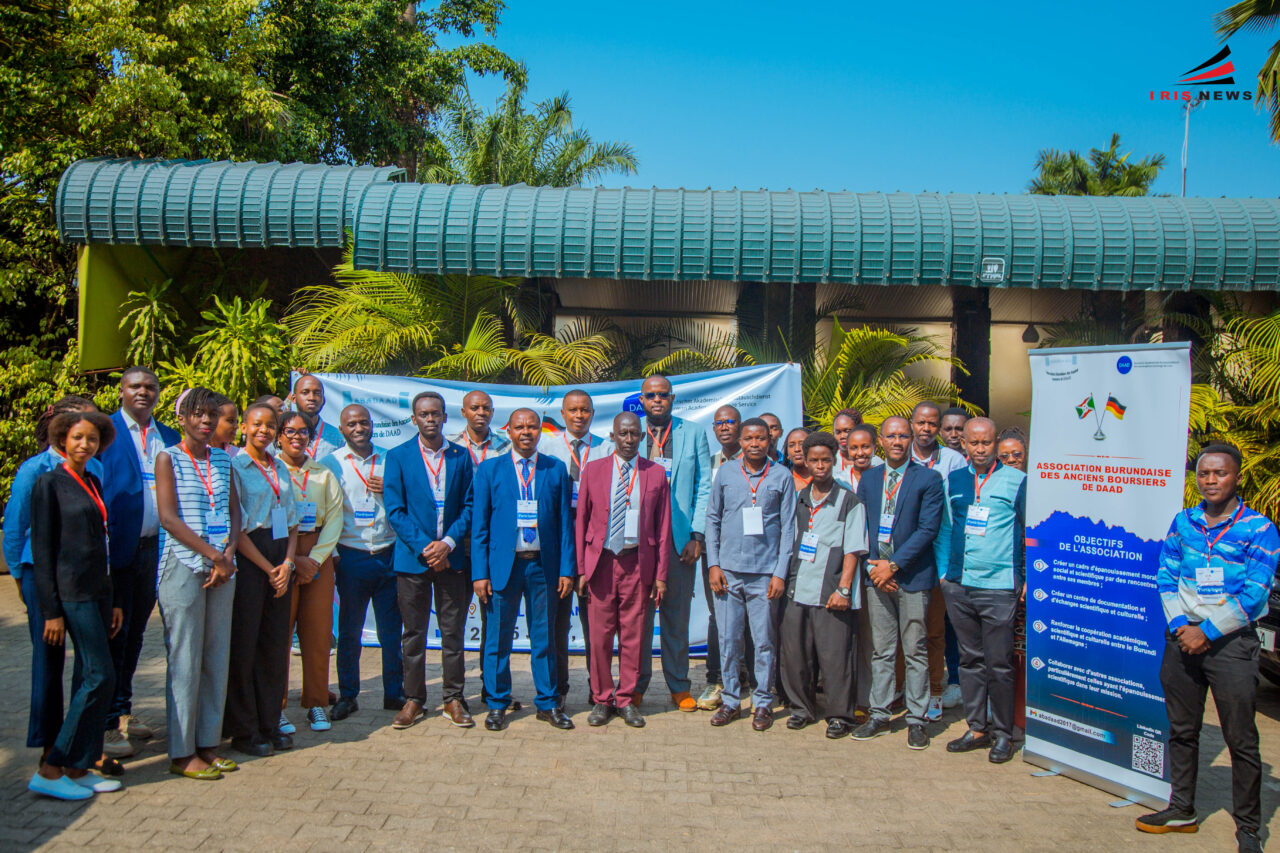
As artificial intelligence finds its way into Burundian universities, clinics, government offices and nearly every other sector, a two-day workshop in Bujumbura raised the question that too often comes too late: who governs the machines before they begin to govern us?
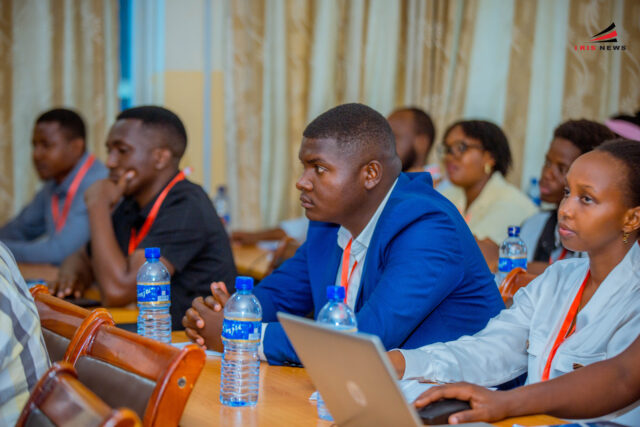
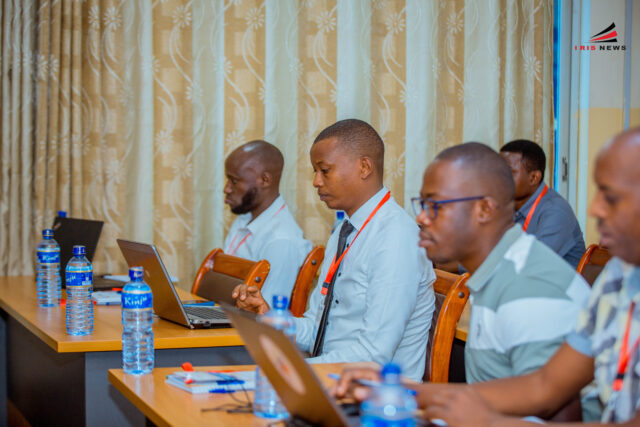
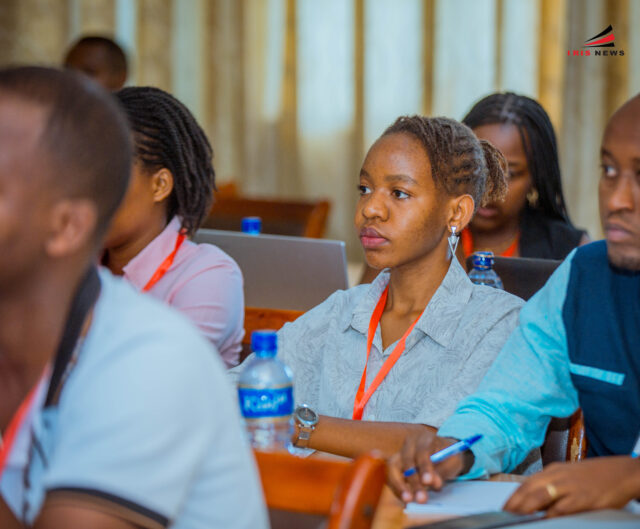
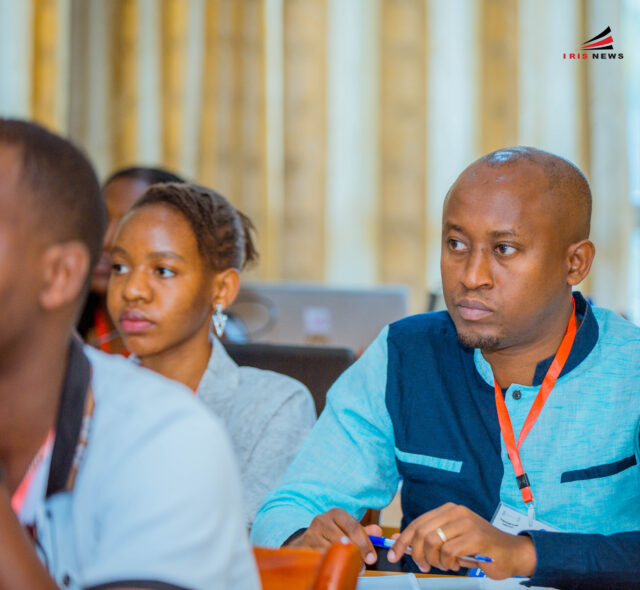
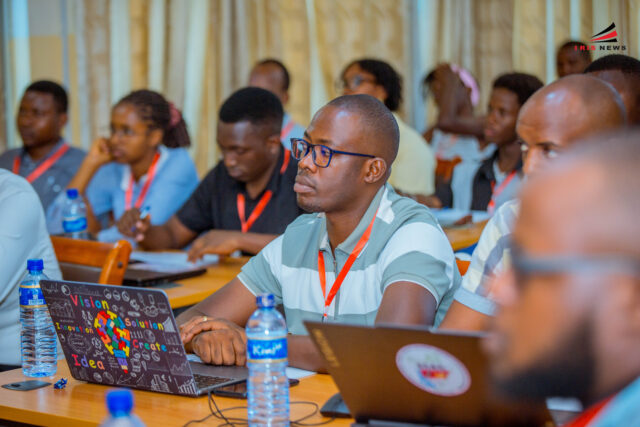
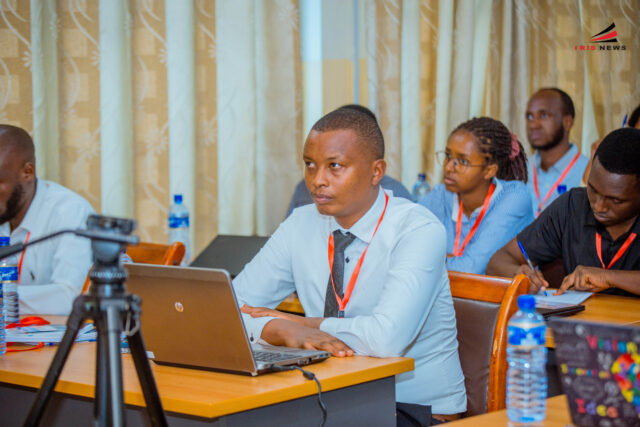
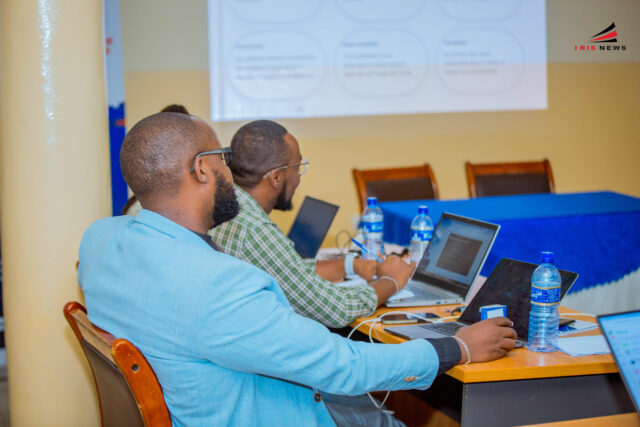
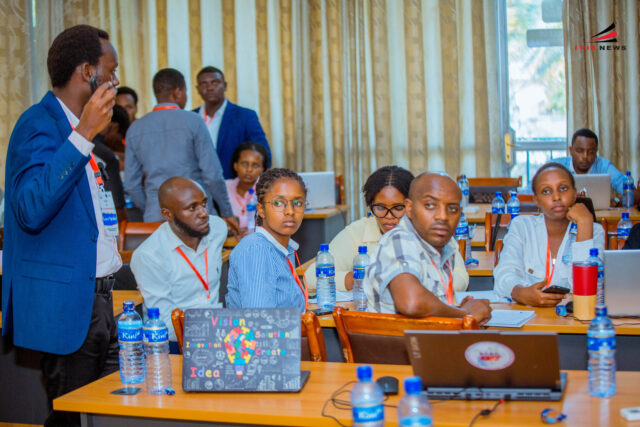
The excitement in the room was easy to spot. Students leaned forward. Young developers compared notes on their laptops between sessions. For two days, a workshop organised in Bujumbura by ABADAAD, the association of former Burundian beneficiaries of the German Academic Exchange Service, known as DAAD, brought together an unusual mix of people: medical doctors, IT specialists, students, and young innovators building digital tools, all drawn by the same subject. Artificial intelligence.
Beneath the enthusiasm, though, ran a steadier current. Almost every speaker, in one way or another, returned to the same warning: technology this powerful cannot be left to run on excitement alone. It needs rules, safeguards and people willing to ask hard questions.
That tension, between what AI promises and what it demands of the societies that adopt it, became the real subject of the workshop, held under the theme “AI Governance and Data Ethics in the Digitalisation Era.” Organised by Yvan Giriteka with support from a DAAD grant for former scholarship holders, and opened with remarks from ABADAAD president Professor Samuel Bunani, the event was an early attempt to ask what responsible AI might look like in a Burundian context.

Burundi is not on the frontier of artificial intelligence, and no one in the room pretended otherwise. Nor is the country starting from nothing. What emerged over two days was something more interesting than either extreme: a picture of a small but attentive community of professionals trying to get ahead of a technology before it outpaces the rules meant to contain it.
Data, before anything else
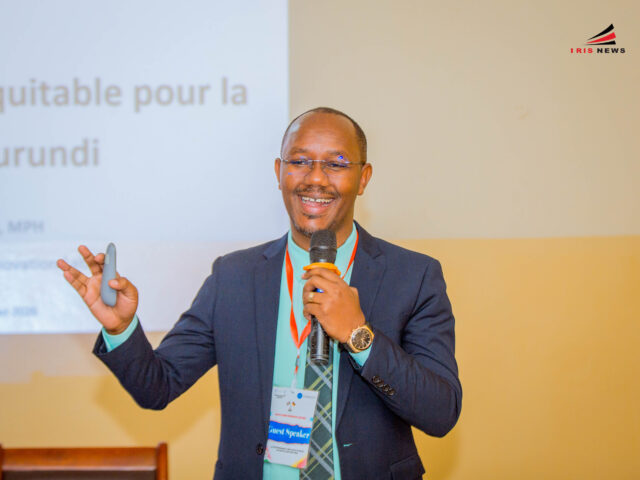
The first speaker to take the floor was Dr Nziza Franck, Director General of the Muganga Innovation Lab (MIL) and president of the Association Burundaise de l’Informatique Médicale (ABIM), who set the tone for the entire workshop with a single, well-worn phrase: “Data is the new oil.”
Nziza’s real point was not that data is valuable; everyone in the room already believed that. His point was that Burundi’s relationship with data is more complicated than it looks. The country, he noted, has recently introduced legislation on the protection of personal data, a sign that the legal groundwork for responsible use is not entirely absent. Yet he also offered an observation that lingered over the rest of the workshop: Burundi has a great deal of information, but relatively little of it exists as structured, usable data.
It is a subtle distinction, but an important one. Information exists everywhere, in records, observations, conversations, paper files. Data, in the sense that AI systems need it, is something else: organised, accessible, and collected with consent. Without it, Nziza argued, even well-intentioned AI tools struggle to function properly, let alone fairly.
For Nziza, responsible AI in a country like Burundi has to be judged against a short list of principles. Does it serve a genuine social purpose? Does it treat different groups fairly? Does it protect the people whose data it uses? Can its decisions be traced? Is someone clearly accountable when something goes wrong?
He was equally candid about the obstacles ahead. Burundi’s digital divide means that access to technology, and the literacy needed to understand it, are unevenly spread across the population. Many people who might one day be affected by an AI-driven decision, in healthcare or in public services, have little sense of how their information is collected or used. Before Burundi can talk seriously about advanced AI, in other words, it has to talk about the far less glamorous work of building trustworthy data.
Will the machines take our place?
If Nziza’s session was about foundations, the second was about the horizon, and it was here that the workshop found its most searching moment.

Elysé Mfisumukiza, a research assistant at the Centre de Recherche pour le Développement Économique et Social (CURDES) at the University of Burundi, built his presentation around the ethical dilemmas raised by increasingly advanced AI. He moved through the practical vocabulary of the field: applied ethics laboratories, risk management, how organisations detect and respond to problems once a system is already in use, transparency, accountability, privacy, and the broader weight these systems carry on human life. But it was the question sitting underneath all of it, the one that seemed to hold the room longest, that gave the session its real force: what happens to people once machines can do what people do?
As AI systems continue to approach, and in some tasks already surpass, human capabilities, he asked participants to sit with a possibility that is no longer purely theoretical: entire categories of work disappearing, not gradually but quickly, and often without warning to the people whose livelihoods depend on them. If that happens, he asked, should societies consider some form of universal basic income for those left behind? Is it fair to expect an economy to absorb people whose skills a machine has simply made redundant, and if not, what does a society owe them instead?
He pushed further still, into questions that unsettle even seasoned technologists. Should humans look to enhance their own abilities to keep pace with machines, through tools like brain-computer interfaces, effectively racing to stay relevant rather than being left behind? Or is there a point at which the honest answer is to slow down, or even halt, certain kinds of AI development, rather than assume that faster is always better? Neither path, he made clear, is simple or without cost.
What made this part of the workshop land so directly was that Mfisumukiza refused to treat it as science fiction. These are not distant scenarios reserved for Silicon Valley boardrooms or European parliaments. They are questions already being debated in newsrooms, universities and policy circles around the world, and they will eventually reach the desks of young Burundians building careers in technology, medicine, public service or everywhere else. Several participants said afterward that this was the part of the workshop that stayed with them longest, not because it offered answers, but because it was the first time many of them had been asked to think seriously about what their own future in an AI-shaped economy might look like. Built around practical exercises rather than lectures, the session pushed people to sit with uncertainty rather than resolve it too quickly, which may be exactly the point.
From raw data to public decisions
The second day shifted the conversation from principles to practice, looking at how AI is already being built, or could be built, into the machinery of public life.
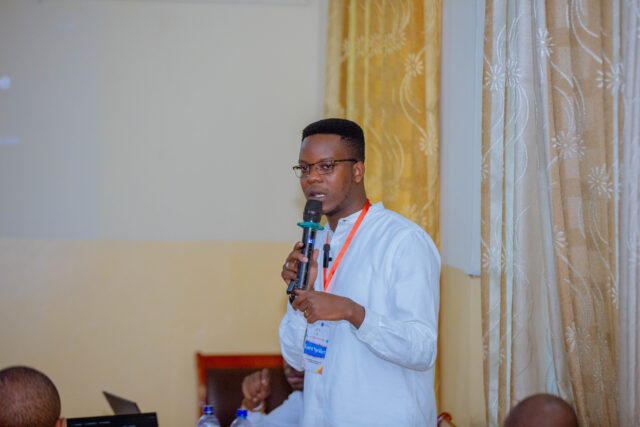
Dieudonné Bwitonzi, founder of PLC Lab, a platform focused on developing and teaching AI, and also the founder of AfriPrompt, an AI model built on Meta AI’s architecture and adapted to respond to African realities, led a session on what he called Building AI for Strategic Resource Governance, tracing a path from raw field data to what he described as intelligent decision support. In practical terms, this meant looking at how governments and institutions might turn scattered, raw information into tools that actually help officials make better decisions, whether that involves monitoring natural resources, managing public infrastructure, or tracking how services are delivered.
Bwitonzi pointed to a system called MineGuard as one example, a platform he created that combines mining intelligence with AI and geospatial data to strengthen the governance of mineral resources. The underlying idea mattered more than the specific technology: AI can genuinely help institutions make sense of complexity, but only if the systems behind it are well designed, properly overseen and built on data that can actually be trusted. Without that foundation, even sophisticated tools risk producing decisions that look authoritative but rest on shaky ground.
That question of oversight carried directly into the next session, led by Benny Alex Nkurunziza, a database analyst and lecturer at the University of Burundi, who focused on governance, cybersecurity and privacy. He walked participants through international governance frameworks, including standards set by UNESCO and ISO, and the cybersecurity risks that come with deploying AI systems, alongside technologies designed to protect privacy while still allowing these systems to function. Underneath the technical detail sat a question that is, at its core, a very human one: as AI systems take on a growing role in decisions that affect people’s lives, who is actually responsible when something goes wrong?
The devices already listening
The workshop’s final session brought the conversation down to something more tangible: the sensors, cameras and connected devices already spreading quietly through daily life. Alvarez Ntafatiro, assistant lecturer at the Faculty of Computer Sciences, Olivia University Bujumbura, led a discussion titled From Sensor to Decision: Governing IoT Data in the Digital Era, examining the security of the so-called Internet of Things, the privacy technologies designed to protect it, and the path data takes from a single sensor to a decision made somewhere far away. He also addressed the broader threat landscape facing connected devices across East Africa.
The message was simple, even if the technology behind it is not. Connected devices are collecting more information than most people realise, and the pressing question is not simply what these tools are capable of, but who controls the data flowing through them, and how well that data is protected. A sensor is a small, unremarkable object. What it feeds into, and who has access to that stream, is where the real stakes lie.
A conversation that has already moved on
By the end of two days, something had shifted in how the room seemed to be thinking about artificial intelligence. The initial fascination with what the technology can do had not disappeared, but it had been joined by a more mature line of questioning, about fairness, consent, accountability and the everyday realities of building trustworthy systems in a country still working out its digital foundations.
Burundi is neither unprepared for this conversation nor at its cutting edge. It occupies a middle ground that is, in some ways, a more useful place to start. The country has legislation on data protection, a small community of specialists thinking seriously about governance, and now, thanks to gatherings like this one, a growing cohort of young people who understand that building AI tools responsibly is at least as important as building them well.
What the ABADAAD workshop suggested, more than any single presentation, is that the debate in Burundi is no longer only about whether AI will arrive. It is already arriving, in clinics, in public data systems, in the sensors quietly gathering information across the region. But if one question defined the two days, it was the one Elie Mfisumukiza put to the room: not simply whether machines can replace people, but what kind of society decides to let them, and what it chooses to protect if they do.